
The checklist is almost on track. So why does something still feel missing?

With the soft rhythmic whisper of drizzle tapping against the window, he was sitting in a decent room. The kind of room your younger self would have scrolled past on Instagram and felt a dull ache of wanting. Modern interior, smart lighting, a speaker playing something curated, devices that respond before you finish your sentence. The faint, expensive smell of a candle with a name like Cedar & Black Pepper.
And somewhere in the middle of all this — maybe after the third Zoom call, maybe while unlocking your phone for no reason — you smile. But not at any of this.
You smile, remembering something old. A nothing moment. A bus ride. A terrace. A tree. A stupid old friend. A strict teacher. A neighbor aunt who has a serious problem with you, you don’t know. A friend who once shared your favorite local dish, in the USA, now earns in dollars shares nothing. Your very first balance on a bicycle in front of your father. Your mother, who holds your top secrets, still pretends like nothing. Your grandmother, who knows much about your parents, you are eager to know.. A summer afternoon with no agenda and ₹200 in your pocket.
There was a time when happiness was embarrassingly cheap.
Pocket money stretched across the week like it had somewhere to be. A shared plate of something fried. A walk that went nowhere. Laughter that cost absolutely nothing and somehow bought everything.
Then the numbers started moving. First, your GPA, then your package, then your salary, then your savings. Each milestone arrived with a sugar-rush of satisfaction — real, genuine, earned. You celebrated. You should have.
But somewhere between the second hike and the fourth EMI, you noticed something strange: the numbers kept going up, and the feeling kept going down.
No one warns you about this. The brochure for ambition never mentions it.
What increasing numbers bring — quietly, without announcement — is increasing weight. More income means more expectations. More title means more performance. More square footage means more square footage to maintain, to fill, to justify.
You didn’t get more free time.
And the cruelest part? You built it yourself. Nail by nail, promotion by promotion, perfectly willing. Because from the outside, it looked exactly like success. Because for a while, it felt like it too.
Consider the festival.
Back home, festivals were an event that arrived like a relative — loud, unavoidable, slightly chaotic, deeply warm. The house smelled like something cooking. Someone was always arguing in the next room. You didn’t need to plan your joy. It just showed up and refused to leave.
Now you live in a city that celebrates everything tastefully. Fairy lights in cafés. A curated playlist for Diwali. A work party with a ‘festive theme.’ Colleagues in nice clothes making pleasant conversation.
It’s fine. It’s all perfectly fine.
But ‘perfectly fine’ has a way of making you grieve things you didn’t know you were losing.
Last week — or maybe it was the week before, the days blur a little now — you spoke to a stranger.
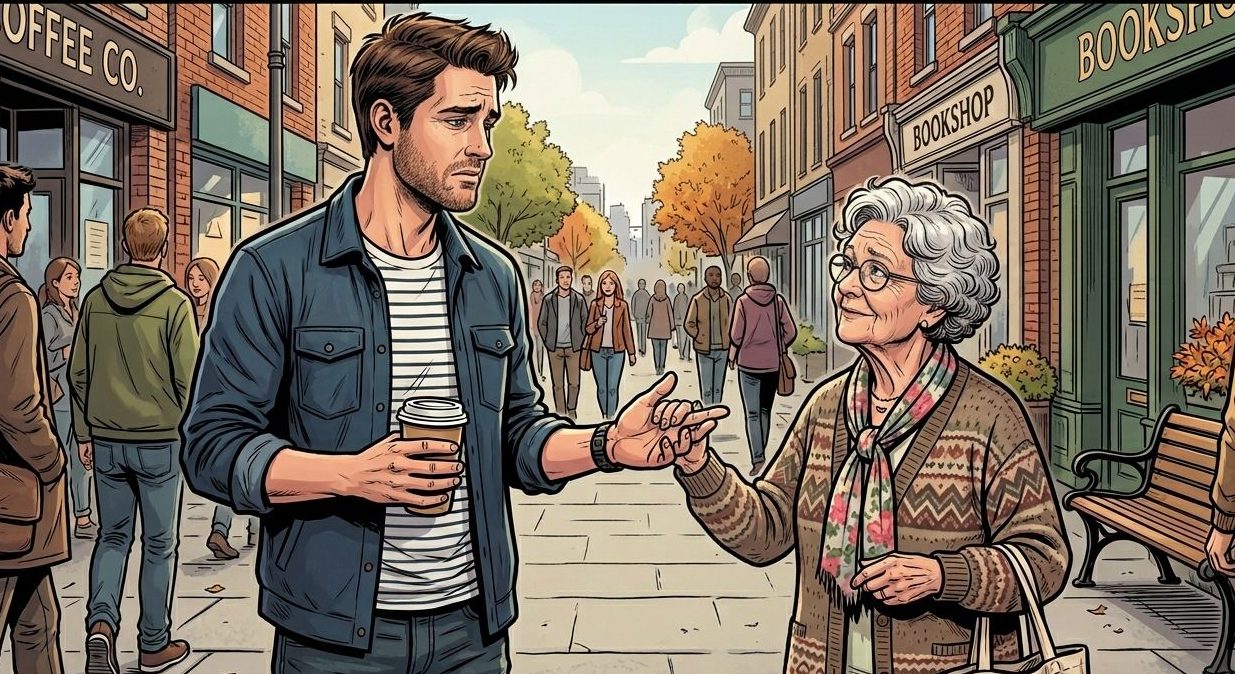
An old woman, perhaps. At a bus stop, or outside a vegetable stall, or on a slow train. She wasn’t impressive. She didn’t say anything particularly wise. She just talked to you as if time were not a resource being managed.
And you realized, standing there, that it was the best conversation you’d had in weeks.
All day long, you speak in complete, professional sentences. Decent presentations. Measured feedback. Good modern jargon dropped in the right places. You are fluent in the language of competence.
But this stranger didn’t need any of that from you. And you didn’t need it from her. And for ten minutes, you were just a person talking to another person, and it felt, absurdly, like relief & then she puts her right hand on your head, says nothing, yet it holds the strongest voice in the moment.
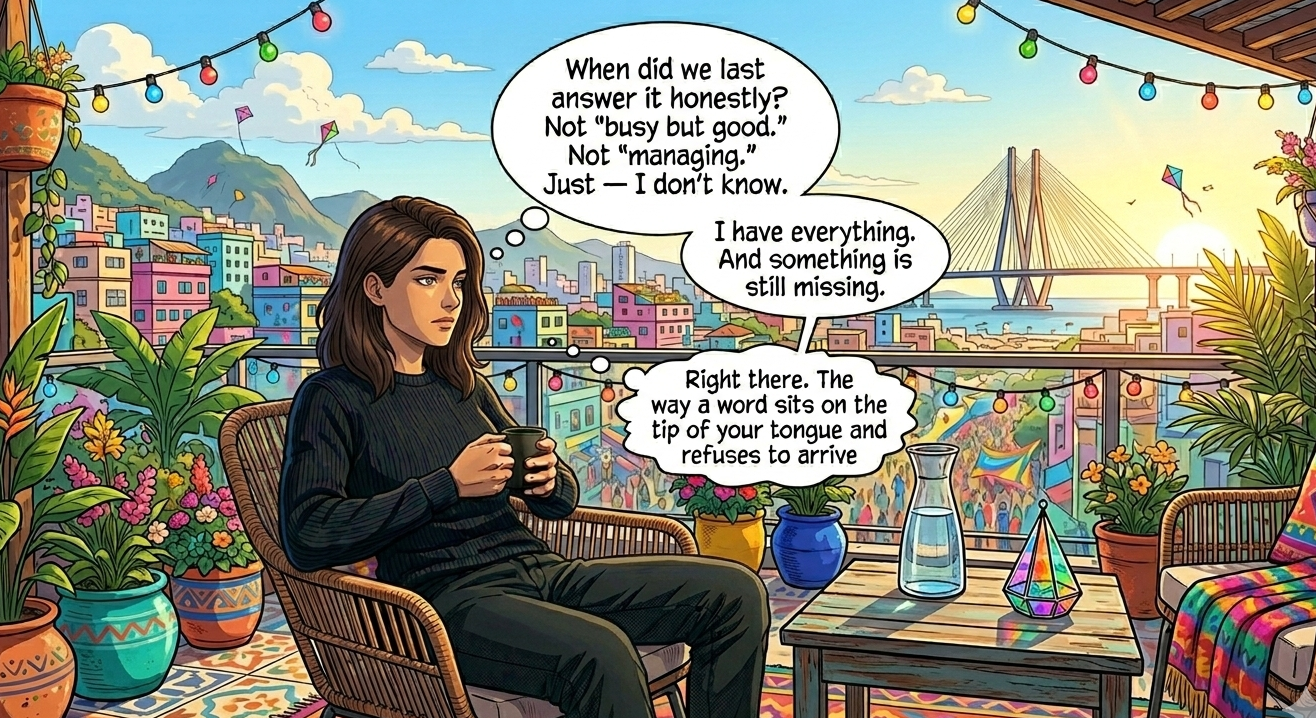
People ask how you are.
You say: busy, but good. Or: it’s been a lot, but managing. Or just: yeah, all good!
These are not lies, exactly. They are load-bearing answers — the kind that keep the conversation moving without requiring you to actually stop and check.
—
So what remains?
Maybe this: the ability to notice. To catch yourself mid-smile — in your fragrant, well-lit room — and follow that smile backwards to what it’s actually about. A person. A place. A version of a day that wasn’t optimized for anything.
The old days weren’t better because they were simpler. They were better because you were present in them in a way that didn’t require effort. You hadn’t learned yet to be somewhere else while standing somewhere.
You can’t go back. But you can stop pretending the numbers are the point.
The window is right there. The evening light is the same evening light. And somewhere, someone who loves you is probably about to send a meme with no context.
Maybe that’s enough to start with.


 VARTAMANAH
What’s your thought about it?